Indian Navy Unveils Plan for Next-Gen Submarine-Launched Cruise Missiles Development
Akriti Precision Systems — High-Precision Desktop CNC Milling
Made-in-India desktop CNC machines with composite superstructures, 15–25 µm repeatability & lifetime frame warranty. Built for aerospace, carbon fiber & precision prototyping.
Explore CNC Systems →Indian Navy Moves Forward with Submarine-Launched LACM Acquisition
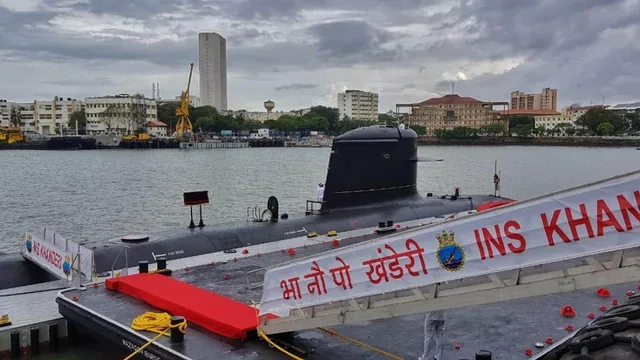
The Indian Navy is poised to take a significant step forward in enhancing its submarine capabilities with the planned issuance of a Request for Proposal (RFP) for the acquisition of a submarine-launched Long-Range Attack Cruise Missile (LACM). This move follows the Navy's earlier Request for Information (RFI) issued earlier this year, which sought to gather responses from potential vendors.
The Indian Navy's requirement for a LACM is aimed at bolstering its conventional attack submarines' strike capabilities, particularly in the context of the country's expanding maritime interests. The desired missile should have a range of over 500km and weigh less than 1.5 tons, allowing it to be launched from a torpedo tube. Furthermore, the missile must be able to fire a salvo of two missiles without mutual interference between homing heads, even from periscope depth.
Several international vendors have already expressed interest in the Indian Navy's RFI, including Russia and France. Russia has offered its latest Kalibr cruise missile, which can be launched from a torpedo tube, while France has proposed a newer variant of its Exocet derivative to be armed on the Kalvari class of submarines. Additionally, BrahMos Aerospace has offered to develop a missile variant that can be launched from a torpedo tube, eliminating the need for Vertical Silos, which are not present on the Navy's conventional attack submarines.
Nanoweave Composites — Precision Engineered Carbon Fiber
Empowering aerospace, UAV defense & robotics with high-performance carbon fiber sheets, custom drone frames & precision CNC composite machining.
Explore Carbon Fiber →However, the Defence Research and Development Organisation (DRDO) appears to be the strongest contender in the competition, with its SLCM being a cruise missile derived from the Nirbhay-line ITCM. The missile features an indigenous Manik turbofan and an RF seeker, which has already been tested from an underwater pantoon. While the DRDO's SLCM seems to be the front-runner, its development and testing process is expected to take several years, with the first flight from a submarine potentially occurring only after 2028. The missile will undergo further underwater launches and user trials before being declared ready for production, which is likely to be beyond 2030.
Despite the DRDO's SLCM being the preferred choice, the Indian Navy is keen to procure small units of SLCMs, even from abroad, to meet its immediate requirements. This is due to the anticipated gap of 5-7 years between the completion of the DRDO's SLCM development and its eventual induction into service. The new SLCM will not be limited to the P-75 program, but will also be integrated into Project-75I and Project-76 programs, providing a more comprehensive submarine strike capability.
The Indian Navy currently operates the Russian Klub-S System (3M-54E / 3M-14E) and the France-supplied Exocet SM39, both of which have limited ranges of 220-300km and 70km, respectively. The RFP for the LACM is aimed at acquiring a missile with a range in excess of 500km, providing the Navy with a more effective submarine standoff strike capability.
Key Takeaways
- The Indian Navy is set to issue an RFP for the acquisition of a submarine-launched LACM with a range of over 500km.
- The desired missile should weigh less than 1.5 tons and be able to fire a salvo of two missiles without mutual interference.
- Several international vendors, including Russia and France, have expressed interest in the Indian Navy's RFI.
- The DRDO's SLCM is the strongest contender, but its development and testing process is expected to take several years.
- The Indian Navy is keen to procure small units of SLCMs, even from abroad, to meet its immediate requirements.
Takshak CAM — Feature-Recognition CAM You Own Outright
Import STEP solids, automatically detect machinable features & post collision-checked 3-axis and 4-axis G-code. Perpetual license with zero recurring subscriptions.
Based on reporting from the original source. See our Copyright Policy for details.