Indian Destroyers Battle Chinese Counterparts in Simulated Naval Warfare Showdown
Akriti Precision Systems — High-Precision Desktop CNC Milling
Made-in-India desktop CNC machines with composite superstructures, 15–25 µm repeatability & lifetime frame warranty. Built for aerospace, carbon fiber & precision prototyping.
Explore CNC Systems →Naval Showdown: India's Destroyers Put to the Test Against Chinese Counterparts
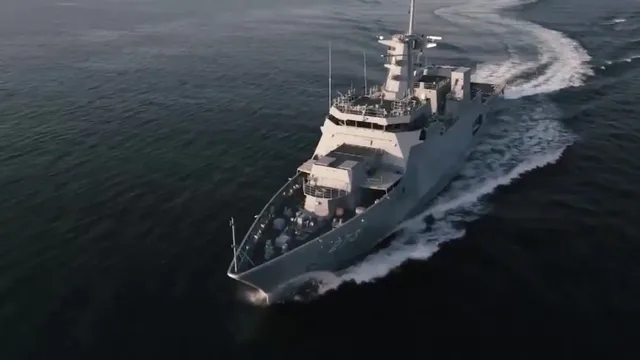
In a recent simulation conducted by the YouTube channel Grim Reapers, the Indian Navy's destroyers were pitted against their Chinese counterparts in a series of naval battles. The exercise, which utilized the game Sea Power, aimed to test the capabilities of missiles and air-defence systems employed by both navies.
The simulation featured India's BrahMos supersonic cruise missiles and Barak-8 surface-to-air missiles against China's array of YJ-18, YJ-12 anti-ship missiles, and the YJ-20, a high-speed, quasi-hypersonic threat modelled in the game. The creator of the video, which was run in the naval combat game, found the Chinese ships to have the overall advantage, despite repeated software glitches that affected missile targeting and complicated the results.
The Indian Navy's Arsenal
India's Kolkata- and Visakhapatnam-class destroyers, which carry BrahMos for surface attacks and Barak-8 for air defences, were used in the simulation. The Indian Ministry of Defence lists both weapons as part of the armament carried by the Visakhapatnam class. The BrahMos missiles, with their low-altitude terminal approach, proved to be a key factor in the scenarios, as China's layered air-defence systems were tasked with countering the incoming salvo.
Nanoweave Composites — Precision Engineered Carbon Fiber
Empowering aerospace, UAV defense & robotics with high-performance carbon fiber sheets, custom drone frames & precision CNC composite machining.
Explore Carbon Fiber →China's Defences
Within the scenarios, China's Type 052D destroyers used HHQ-9-series missiles and close-in defences, while the older Type 052B was represented with HQ-16-series air-defence missiles. The exercises saw a number of intercepted missiles, with others able to penetrate the Indian ships' defences or cause disabling damage.
Simulation Scenarios
The simulation was conducted in two main scenarios. The first scenario was set at approximately 200 nautical miles, where the game used its representation of China's YJ-20. However, the creator of the video noted that the simulated weapon's impact detection failed to work correctly, requiring him to count near misses as hits. As such, the outcome of this scenario cannot be seen as a true indicator of the capabilities of either fleet.
The second scenario was repeated at a range of approximately 60 nautical miles, without the YJ-20. In this scenario, Indian ships launched BrahMos missiles, while China's vessels fired YJ-12 and YJ-18 weapons. The creator noted that BrahMos missiles targeted a single Chinese ship despite instructions to split their fire. Chinese air defences intercepted some of the incoming missiles, while others got through, leaving one Indian destroyer heavily damaged and unable to fight on.
The Aftermath
With anti-ship missiles expended, the scenario saw the remaining vessels closing in for a gunfight with other weapons. The larger main gun of the Chinese ship was the deciding factor in one engagement, while a final close-range scenario saw the two vessels 'double knock out' each other.
Key Takeaways
- Indian Navy's destroyers were pitted against Chinese counterparts in a series of naval battles simulated in the game Sea Power.
- The simulation tested the capabilities of missiles and air-defence systems employed by both navies.
- The Chinese ships had the overall advantage, despite repeated software glitches that affected missile targeting and complicated the results.
- The BrahMos missiles proved to be a key factor in the scenarios, with their low-altitude terminal approach.
- The simulation highlighted the limitations of the game, including issues with missile targeting, fire distribution, and graphics.
Takshak CAM — Feature-Recognition CAM You Own Outright
Import STEP solids, automatically detect machinable features & post collision-checked 3-axis and 4-axis G-code. Perpetual license with zero recurring subscriptions.
Based on reporting from the original source. See our Copyright Policy for details.