Indian Army's Anti-Drone Cope Cage: A Game-Changer for Towed Artillery
India Defence & Aerospace Indigenisation Summit 2026
Accelerating private defense manufacturing, UAV innovation, and strategic aerospace corridors.
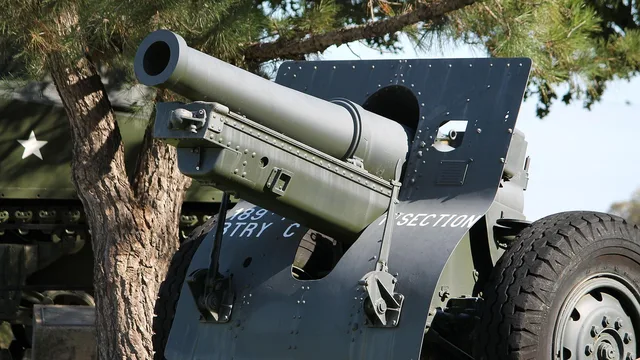
Explore Strategic Intel →The Indian Army's decision to equip its 105mm towed field gun with a protective anti-drone cope cage marks a significant shift in the way the military approaches artillery survivability. In an era where drones have become increasingly prevalent on the battlefield, the Army is recognizing the need for additional protection to safeguard its artillery units.
The cope cage, a large metal mesh structure, provides overhead and lateral protection for the gun and crew, making it more difficult for drones to detect and attack them. This innovative solution is not intended to make an artillery gun immune to drones, but rather to provide an additional layer of passive protection. Depending on the design and attack angle, the mesh can interfere with a drone's approach or prevent a drone-dropped munition from reaching the most vulnerable areas of the platform.
The Indian Army's adoption of cope cages is part of a broader strategy to reduce vulnerability to attacks from above. In the Russia-Ukraine war, artillery has become a major target for persistent drone reconnaissance, FPV attacks, and loitering munitions. Indian military planners have recognized that artillery survivability now depends not only on mobility and camouflage but also on reducing vulnerability to attacks from above.
India Defence & Aerospace Indigenisation Summit 2026
Accelerating private defense manufacturing, UAV innovation, and strategic aerospace corridors.
Explore Strategic Intel →The Army's large inventory of legacy artillery remains a valuable asset, despite its vulnerability to drone attacks. Adding lightweight passive protection, such as cope cages, could offer a relatively inexpensive way to improve the survivability of existing artillery fleets while more comprehensive counter-drone systems are deployed.
The 105mm gun seen with the cope cage should not be viewed as a replacement for electronic warfare, hard-kill counter-drone systems, or battlefield air defence. Rather, it represents another layer of protection in an increasingly drone-dominated battlefield. The Indian Army's decision to equip its artillery with cope cages is a proactive step towards ensuring its artillery remains effective and survivable on the modern battlefield.
As the threat from drones continues to evolve, the Indian Army is taking a proactive approach to counter the threat. The adoption of cope cages is a significant development, and it is likely that other militaries will follow suit. The future of artillery may depend on its ability to counter the drone threat, and the Indian Army is leading the way in this regard.
The Rise of Drone Warfare
The use of drones on the battlefield has become increasingly prevalent in recent years. Drones have proven to be effective in reconnaissance, surveillance, and attack missions. However, their use also poses a significant threat to artillery units, which are often vulnerable to drone attacks.
The Need for Additional Protection
The Indian Army's decision to equip its 105mm towed field gun with a cope cage marks a significant shift in the way the military approaches artillery survivability. The cope cage provides an additional layer of passive protection, making it more difficult for drones to detect and attack the gun and crew.
The Role of Cope Cages
Cope cages are designed to provide overhead and lateral protection for artillery units. They can interfere with a drone's approach or prevent a drone-dropped munition from reaching the most vulnerable areas of the platform. The use of cope cages is not intended to make an artillery gun immune to drones, but rather to provide an additional layer of protection.
The Future of Artillery
The Indian Army's decision to equip its artillery with cope cages is a proactive step towards ensuring its artillery remains effective and survivable on the modern battlefield. As the threat from drones continues to evolve, the Army is taking a proactive approach to counter the threat. The adoption of cope cages is a significant development, and it is likely that other militaries will follow suit.
Key Takeaways
- The Indian Army's decision to equip its 105mm towed field gun with a cope cage marks a significant shift in the way the military approaches artillery survivability.
- The cope cage provides an additional layer of passive protection, making it more difficult for drones to detect and attack the gun and crew.
- The use of cope cages is not intended to make an artillery gun immune to drones, but rather to provide an additional layer of protection.
- The Indian Army's adoption of cope cages is part of a broader strategy to reduce vulnerability to attacks from above.
- The future of artillery may depend on its ability to counter the drone threat, and the Indian Army is leading the way in this regard.
India Defence & Aerospace Indigenisation Summit 2026
Accelerating private defense manufacturing, UAV innovation, and strategic aerospace corridors.
Based on reporting from the original source. See our Copyright Policy for details.