IAF's Long-Range Strike Capabilities Put to the Test in May 7 Operation
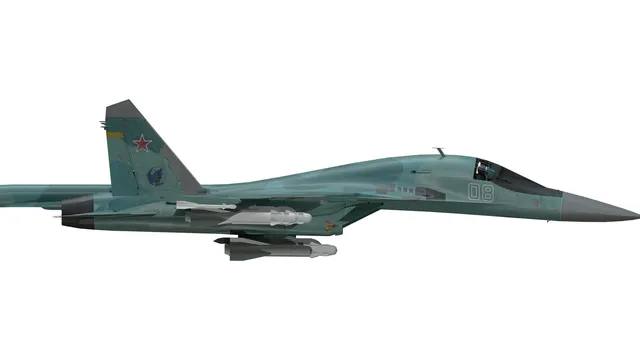
The India-Pakistan confrontation in May 2025 marked a significant escalation in the region, with both nations engaging in a series of strikes and counter-strikes that would ultimately change the dynamics of their long-standing rivalry.
At the heart of the conflict was the Indian Air Force's (IAF) long-range strike capabilities, which were put to the test in a series of precision strikes against terrorist infrastructure in Pakistan and Pakistan-occupied Jammu and Kashmir. According to a senior IAF pilot who participated in the May 7 strikes, the Pakistani Air Force's (PAF) response was "very slow," allowing the Indian strike force to complete its mission and withdraw.
The pilot's assessment highlights the importance of networked warfare in modern air warfare, where the effectiveness of a strike package depends on the quality of intelligence, surveillance, communications, electronic warfare, and command-and-control architecture. In this context, the IAF's long-range strike architecture played a crucial role, providing the range, payload, and sensor capability required for the mission.
The May 7 strikes were a departure from the conventional deep air raid, with the IAF deliberately avoiding Pakistani military installations during the initial phase. This approach was designed to minimize the risk of escalation and to focus on the primary objective of targeting terrorist infrastructure.
However, the operation was not without its challenges. The IAF's long-range strike force had to operate under the possibility of Pakistani fighter interception and ground-based air-defence engagement, making speed and agility critical to success. The pilot's account suggests that the PAF's response was slower than expected, allowing the Indian strike force to complete its mission and withdraw.
The significance of the May 7 operation lies not only in the IAF's ability to conduct long-range strikes deep inside Pakistani territory but also in the PAF's eventual adaptation of tactics. As the conflict escalated, the PAF employed a mixture of combat aircraft, long-range weapons, drones, and other systems to counter the IAF's precision strikes.
The experience gained during the May 7 operation has significant implications for the future of air warfare. The importance of networked warfare in modern air warfare cannot be overstated, with the effectiveness of a strike package depending on the quality of intelligence, surveillance, communications, electronic warfare, and command-and-control architecture.
In conclusion, the India-Pakistan confrontation in May 2025 marked a significant escalation in the region, with both nations engaging in a series of strikes and counter-strikes that would ultimately change the dynamics of their long-standing rivalry. The Indian Air Force's long-range strike capabilities played a crucial role in the conflict, highlighting the importance of networked warfare in modern air warfare.
Based on reporting from the original source. See our Copyright Policy for details.