HAL Chief Test Pilot Calls Tejas Mk2 ‘Amazing Looking’
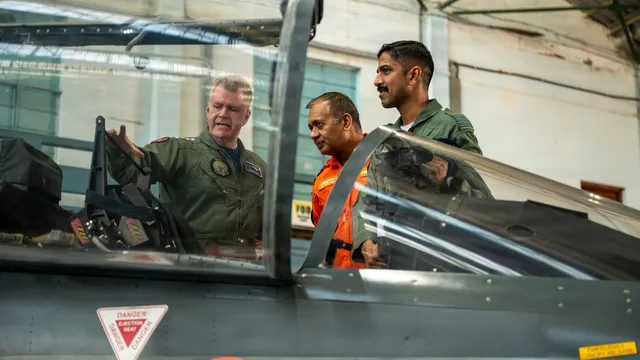
The Indian Air Force is on the cusp of a major breakthrough with the Tejas Mk2, a next-generation fighter designed to bridge the gap between current and future generations of Indian fighters. This larger, more capable aircraft is the result of years of research and development, with a focus on creating a significantly more capable indigenous fighter that can be produced in significant numbers.
The Tejas Mk2 is being developed by the Aeronautical Development Agency (ADA) in partnership with Hindustan Aeronautics Limited (HAL), with the General Electric F414 engine providing substantially greater thrust, improved acceleration, and enhanced payload performance. This higher thrust class is expected to give the Mk2 improved acceleration, payload performance, and overall combat capability, making it an important step towards a fifth-generation stealth platform.
The aircraft's larger airframe allows for increased internal fuel capacity, additional space for sensors and avionics, and greater growth potential. This is a significant departure from the earlier Tejas variants, which were designed around increased performance and growth potential. The Mk2 is intended to deliver a larger, more capable fourth-generation-plus fighter that can be produced in significant numbers.
The programme's progress from design to system-level testing has been marked by delays, making the October 2026 power-on milestone particularly important. Successful completion of the ground-integration phase would demonstrate that the programme has moved decisively from design and manufacturing into system-level testing. This would be a major breakthrough for the Indian aerospace industry, providing a significant boost to the country's indigenous fighter capabilities.
The next major objective after power-on will be the completion of ground tests and preparation for the prototype's first flight. A successful flight-test programme will then be required to validate the aircraft's aerodynamic characteristics, flight-control laws, propulsion system, avionics, and weapons integration. This will be a critical phase of the programme, as it will determine the aircraft's operational performance and its ability to meet the Indian Air Force's requirements.
The Tejas Mk2 is more than just another variant of the Tejas family. Its larger size, higher thrust, increased payload, and greater systems capacity are intended to provide the IAF with a significantly more capable indigenous fighter. This is a major step forward for the Indian aerospace industry, providing a platform for the development of larger and more sophisticated combat aircraft.
The Indian Air Force is expected to play a critical role in the development and deployment of the Tejas Mk2. The aircraft's design and capabilities are tailored to meet the IAF's requirements, with a focus on creating a fighter that can be produced in significant numbers. The Tejas Mk2 is a testament to the country's commitment to indigenous defence production and its ability to develop world-class fighter aircraft.
As the programme moves forward, it is clear that the Tejas Mk2 is a game-changer for the Indian Air Force. Its larger size, higher thrust, increased payload, and greater systems capacity make it a significantly more capable indigenous fighter. The programme's success will depend on the ability of the Indian aerospace industry to deliver a high-quality aircraft that meets the IAF's requirements. With the October 2026 power-on milestone looming, the stage is set for a major breakthrough in the development of India's next-generation fighter.
The Tejas Mk2 is a significant step forward for the Indian aerospace industry, providing a platform for the development of larger and more sophisticated combat aircraft. Its success will depend on the ability of the Indian aerospace industry to deliver a high-quality aircraft that meets the IAF's requirements. With the programme's progress from design to system-level testing, it is clear that the Tejas Mk2 is a game-changer for the Indian Air Force.
A Leap Forward for the Tejas Programme
The Tejas Mk2 is a significant departure from the earlier Tejas variants, with a larger airframe and higher thrust class. This is a major step forward for the Indian aerospace industry, providing a platform for the development of larger and more sophisticated combat aircraft.
Bridging the Gap to the Future
The Tejas Mk2 is designed to bridge the gap between current and future generations of Indian fighters. Its larger size, higher thrust, increased payload, and greater systems capacity make it a significantly more capable indigenous fighter.
Powering Ahead
The programme's progress from design to system-level testing has been marked by delays, making the October 2026 power-on milestone particularly important. Successful completion of the ground-integration phase would demonstrate that the programme has moved decisively from design and manufacturing into system-level testing.
A Major Breakthrough
The Tejas Mk2 is more than just another variant of the Tejas family. Its larger size, higher thrust, increased payload, and greater systems capacity are intended to provide the IAF with a significantly more capable indigenous fighter.
Key Takeaways
- The Tejas Mk2 is a next-generation fighter designed to bridge the gap between current and future generations of Indian fighters.
- The aircraft features a larger airframe, higher thrust class, and increased payload capacity, making it a significantly more capable indigenous fighter.
- The programme's progress from design to system-level testing has been marked by delays, making the October 2026 power-on milestone particularly important.
- Successful completion of the ground-integration phase would demonstrate that the programme has moved decisively from design and manufacturing into system-level testing.
- The Tejas Mk2 is a major step forward for the Indian aerospace industry, providing a platform for the development of larger and more sophisticated combat aircraft.
Based on reporting from the original source. See our Copyright Policy for details.