Decoying the Enemy: India's ₹2,500 D³ Decoy UAV Revolutionizes Air Defense
India Defence & Aerospace Indigenisation Summit 2026
Accelerating private defense manufacturing, UAV innovation, and strategic aerospace corridors.
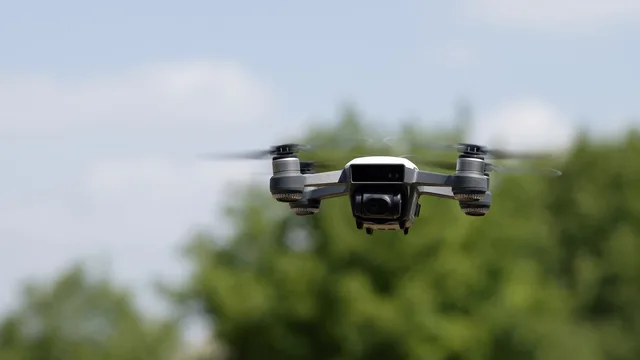
Explore Strategic Intel →India's defense private industry has been making waves in recent years, with innovative solutions and cutting-edge technologies emerging from the sector. The latest breakthrough comes from D³, a startup that has unveiled a revolutionary passive decoy UAV concept designed to outsmart enemy air-defense networks. This game-changing system mimics the radar signature of a Rafale fighter jet without emitting any electromagnetic energy, making it nearly indistinguishable from its manned counterpart.
The D³ decoy UAV is built around a passive design, presenting a carefully formulated radar signature without actively emitting any form of electromagnetic energy. This approach allows the system to saturate enemy air defenses and enhance mission survivability, making it an attractive option for the Indian Armed Forces. The system features a spherical design with a diameter of 120 mm and a payload mass ranging between 350-500 grams. A simulated Radar Cross Section of roughly 1.5 square meters has been claimed, with a Rafale-tier classification.
The significance of this system lies in its ability to provide the radar signature of a manned aircraft without the tell-tale signs of emitted energy. This is achieved through the use of complex lattice structure technologies, which create a radar reflected signature for battlefield deception. The D³ concept is a testament to India's rapidly developing defense private industry, leveraging low-cost UAVs and complex lattice structure technologies to create innovative solutions for the military.
India Defence & Aerospace Indigenisation Summit 2026
Accelerating private defense manufacturing, UAV innovation, and strategic aerospace corridors.
Explore Strategic Intel →The D³ decoy UAV is not just a novelty; it has the potential to disrupt the status quo in electronic warfare. By offering a low-cost alternative to expensive electronic-warfare assets, the system could revolutionize the way air defenses are managed. The Indian Armed Forces could benefit from this technology, as it would allow them to protect their manned assets more effectively and achieve higher mission survivability.
However, the success of the D³ concept will depend on its ability to maintain an effective radar signature from multiple aspect angles, distances, radar waveforms, and conditions. The published numbers will require scrutiny in terms of real-world effectiveness, considering these are provided figures from the designer and the actual capability could vary. Nevertheless, the D³ decoy UAV is a promising development, and its potential impact on the defense sector cannot be overstated.
In terms of a basic design rationale, the D³ concept raises an interesting question: why spend valuable taxpayer money on a high-tech, costly fighter jet for purposes that a small, very low-cost, expendable platform can fulfill instead? The D³ decoy UAV offers a compelling answer to this question, providing a low-cost, effective air-defense jamming solution that keeps Indian fighter pilots safe in harm's way.
A Breakthrough in Electronic Warfare
The D³ decoy UAV is a breakthrough in electronic warfare, offering a low-cost alternative to expensive electronic-warfare assets. This system has the potential to disrupt the status quo in air defense management, providing a more effective way to protect manned assets and achieve higher mission survivability.
Leveraging Low-Cost UAVs and Complex Lattice Structure Technologies
The D³ concept leverages low-cost UAVs and complex lattice structure technologies to create a radar reflected signature for battlefield deception. This innovative approach has the potential to revolutionize the way air defenses are managed, offering a more effective and cost-efficient solution.
A Promising Development for the Indian Defense Sector
The D³ decoy UAV is a promising development for the Indian defense sector, offering a low-cost, effective air-defense jamming solution. This system has the potential to disrupt the status quo in electronic warfare, providing a more effective way to protect manned assets and achieve higher mission survivability.
Key Takeaways
- The D³ decoy UAV is a revolutionary passive decoy UAV concept designed to outsmart enemy air-defense networks.
- The system mimics the radar signature of a Rafale fighter jet without emitting any electromagnetic energy, making it nearly indistinguishable from its manned counterpart.
- The D³ decoy UAV features a spherical design with a diameter of 120 mm and a payload mass ranging between 350-500 grams.
- The system has a simulated Radar Cross Section of roughly 1.5 square meters, claiming a Rafale-tier classification.
- The D³ concept has the potential to disrupt the status quo in electronic warfare, offering a low-cost alternative to expensive electronic-warfare assets.
India Defence & Aerospace Indigenisation Summit 2026
Accelerating private defense manufacturing, UAV innovation, and strategic aerospace corridors.
Based on reporting from the original source. See our Copyright Policy for details.