D-Propulse Aims to Revolutionize Space Tech with 10 kN RDE Engine Advances
India Defence & Aerospace Indigenisation Summit 2026
Accelerating private defense manufacturing, UAV innovation, and strategic aerospace corridors.
Explore Strategic Intel →India's Private Defence Sector Takes a Giant Leap in Propulsion Technology
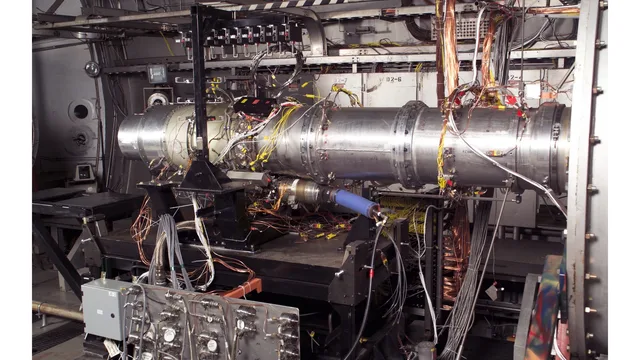
In a significant development, D-Propulse, a leading private defence company in India, is making rapid strides in the development of Rotating Detonation Engines (RDEs), a technology that has the potential to revolutionize the propulsion systems of various aerospace platforms. Speaking to Ctrl Alt Defence podcast, Saurav Jha, the founder and CEO of D-Propulse, revealed that the company's existing 5 kN RDE could be scaled up to 7 kN without significant design changes, and expressed confidence that a 10 kN RDE is achievable within the next few years.
The 10 kN thrust class is considered a sweet spot in the aerospace industry, being too small for primary heavy-lift boosters but ideally suited for a wide range of advanced space, missile, and unmanned aircraft applications. D-Propulse's RDE technology has already demonstrated significant efficiency gains, with the company's newer combustor designs showing a threefold increase in thrust compared to earlier configurations, alongside a 35 percent improvement in efficiency.
The potential applications of a 10 kN RDE are vast and diverse, ranging from upper-stage space manoeuvring and orbital insertion to hypersonic missiles and high-speed boosters. In the space domain, a 10 kN RDE could serve as primary propulsion for small-lift orbital launch vehicles, designed to deploy Low Earth Orbit constellations. The same thrust class could also function as a high-efficiency kick stage for medium-lift rockets, allowing for heavier payloads or reduced propellant consumption during orbital transfer and deep-space trajectory correction manoeuvres.
India Defence & Aerospace Indigenisation Summit 2026
Accelerating private defense manufacturing, UAV innovation, and strategic aerospace corridors.
Explore Strategic Intel →Lunar or planetary landers represent another natural fit for a 10 kN RDE, as descent and ascent stages demand high reliability and strong thrust-to-weight performance from a minimal footprint. The technology's ability to release massive energy within a compact volume makes it an attractive option for powering the boost phase of tactical or strategic hypersonic glide vehicles.
- Hypersonic Missiles and High-Speed Boosters: A 10 kN class RDE is well-suited to powering the boost phase of tactical or strategic hypersonic glide vehicles, where the technology's ability to release massive energy within a radically compact volume keeps the overall missile body smaller.
- Upper-Stage Space Manoeuvring and Orbital Insertion: A 10 kN RDE running on propellant combinations like liquid oxygen paired with methane or hydrogen could serve as primary propulsion for small-lift orbital launch vehicles designed to deploy Low Earth Orbit constellations.
- Lunar or Planetary Landers: The technology's ability to release massive energy within a compact volume makes it an attractive option for powering descent and ascent stages of lunar or planetary landers.
Jha has been vocal about viewing RDE technology as a general-purpose capability, comparable in long-term significance to artificial intelligence or electricity. He expects the technology to eventually permeate both civilian and military aviation, rockets, and cruise missiles alike. D-Propulse's approach is to build a broader stack of RDE-based propulsion solutions applicable across drones, missiles, and other high-speed platforms, rather than engineering narrowly toward one specific end use from the outset.
While D-Propulse has made significant progress in the development of RDE technology, the company still has a substantial gap to bridge before achieving a fully flight-cleared, operationally deployed engine. The company's publicly stated roadmap targets a flight-ready 5 kN-class system by December 2027 and offers RDE-powered munitions for Indian military user trials only by December 2029. A 10 kN engine, even if development proves achievable within a few years, would still need to pass through comparable validation stages before reaching any of the applications outlined above.
Key Takeaways
- D-Propulse is making rapid strides in the development of Rotating Detonation Engines (RDEs), with the company's existing 5 kN RDE potentially scalable to 7 kN without significant design changes.
- A 10 kN RDE is considered a sweet spot in the aerospace industry, being too small for primary heavy-lift boosters but ideally suited for a wide range of advanced space, missile, and unmanned aircraft applications.
- The potential applications of a 10 kN RDE are vast and diverse, ranging from upper-stage space manoeuvring and orbital insertion to hypersonic missiles and high-speed boosters.
- D-Propulse's approach is to build a broader stack of RDE-based propulsion solutions applicable across drones, missiles, and other high-speed platforms, rather than engineering narrowly toward one specific end use from the outset.
India Defence & Aerospace Indigenisation Summit 2026
Accelerating private defense manufacturing, UAV innovation, and strategic aerospace corridors.
Based on reporting from the original source. See our Copyright Policy for details.