Crossing the Threshold: Uncovering the Unspoken Plea Behind India's BrahMos Strikes
The May 2025 India-Pakistan confrontation was a tense and high-stakes game of international diplomacy. As the two sides engaged in a series of missile and drone strikes, the risk of further escalation remained high. However, a shocking plea from Pakistan's Director General of Military Operations (DGMO) to his Indian counterpart reveals a rare glimpse into the intensity of military pressure on Pakistan.
According to former Indian DGMO Lieutenant General Rajiv Ghai, Pakistan's DGMO made a desperate appeal to stop India's BrahMos missile strikes. The reported conversation highlights the psychological toll of India's long-range precision-strike campaign, which proved a formidable challenge for Pakistan's defenses.
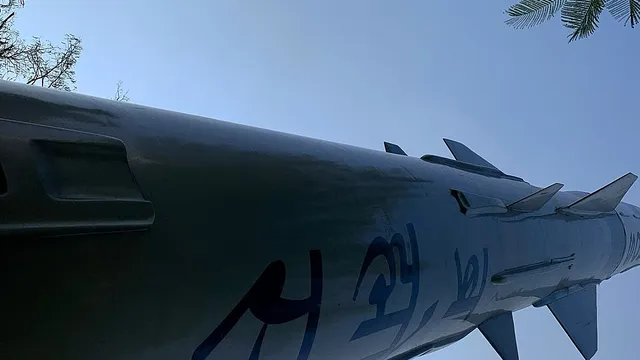
The BrahMos missile, with its speed and accuracy, was a game-changer in the India-Pakistan conflict. Its combination of speed, accuracy, and relatively short reaction time made it a particularly challenging weapon for Pakistan's military to defend against. The Indian military's increasing integration of the BrahMos missile into its strike architecture further complicated Pakistan's defense strategy.
The reported conversation between the two DGMOs occurred against the backdrop of extensive missile and drone activity between India and Pakistan. The risk of further escalation remained high, and the two sides were engaged in a tense game of cat and mouse. However, the Pakistani DGMO's plea to stop the BrahMos strikes reveals a deeper psychological pressure created by India's long-range precision-strike campaign.
The importance of military hotlines in de-escalating tensions between adversarial nuclear-armed states cannot be overstated. The reported conversation between the two DGMOs highlights the significance of direct communication between senior commanders in preventing further escalation. Military hotlines provide a reliable channel for communication when escalation risks become acute, and their purpose is not necessarily to prevent military action altogether but to ensure that senior commanders have a reliable channel through which they can communicate.
The episode also demonstrates why Pakistan's military leadership tried repeatedly to establish contact with India, first through the hotline and subsequently through the Ministry of External Affairs. The failure of the hotline and the subsequent direct conversation between the two DGMOs reveal a complex web of communication breakdowns and reconnections.
The reported May 10 conversation therefore offers a rare insight into the final stages of the confrontation. Pakistan's effort to establish contact, the temporary failure of the hotline, and the subsequent direct conversation between the two DGMOs all occurred as both sides sought to bring the fighting to an end. The episode highlights the importance of communication in preventing further escalation and the significance of military hotlines in de-escalating tensions between adversarial nuclear-armed states.
The BrahMos missile strike campaign was a defining moment in the India-Pakistan conflict. The reported conversation between the two DGMOs reveals a deeper psychological pressure created by India's long-range precision-strike campaign, which left Pakistan's military scrambling to defend against the missile's speed and accuracy. The episode highlights the importance of military hotlines in de-escalating tensions between adversarial nuclear-armed states and the significance of direct communication between senior commanders in preventing further escalation.
In the end, the reported conversation between the two DGMOs offers a rare glimpse into the intensity of military pressure on Pakistan and the psychological toll of India's long-range precision-strike campaign. It is a powerful reminder of the importance of communication in preventing further escalation and the significance of military hotlines in de-escalating tensions between adversarial nuclear-armed states. As the two sides continue to navigate the complexities of international diplomacy, the episode serves as a valuable lesson in the importance of communication in preventing further conflict.
Based on reporting from the original source. See our Copyright Policy for details.