Beyond the Threshold: BrahMos Embarks on a New Era of Supersonic Strike
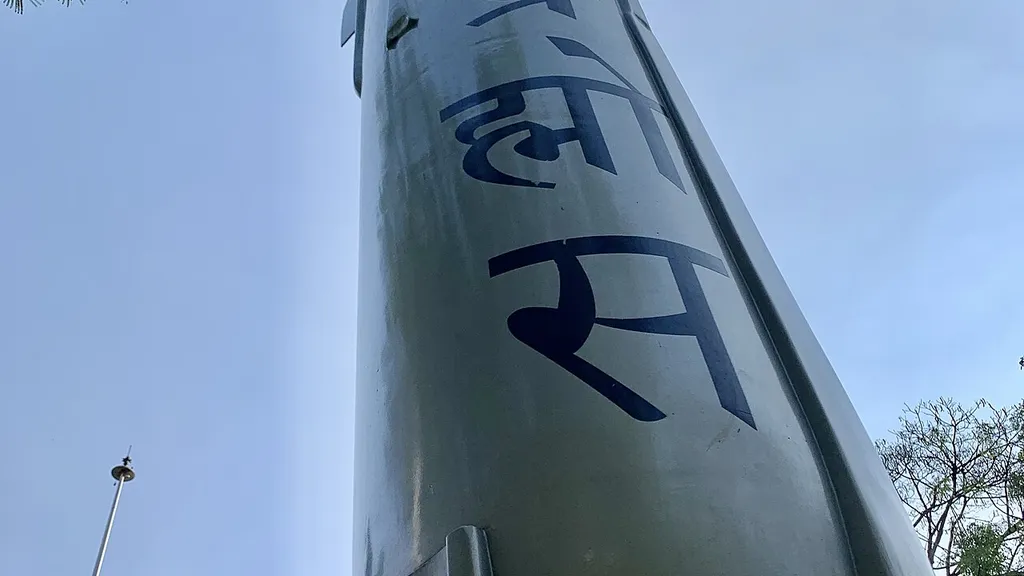
The Evolution of BrahMos: A Supersonic Strike System on the Cusp of a New Era
The BrahMos supersonic cruise missile has been a cornerstone of India's military capabilities for over a decade, with its range and precision strike capabilities making it an invaluable asset for the Indian Navy and Air Force. However, the missile's designers and manufacturers have been working tirelessly to push the boundaries of what is possible, with a long-term objective to extend its range to 1,500 kilometres.
This ambitious goal is not without its challenges. The current BrahMos missile has a range of nearly 900 kilometres, which is a significant achievement in itself. However, to reach the 1,500 kilometre mark, the missile's designers will need to make significant advances in propulsion, materials science, aerodynamics, and systems engineering.
One of the key areas of focus is the use of advanced composite materials. These materials offer high strength while significantly reducing mass, which is crucial for a missile that needs to maintain its speed and agility while also carrying a large payload. The BrahMos designers are already exploring the use of carbon-fibre composites and other lightweight materials to reduce the missile's empty weight, allowing more internal volume and weight to be allocated for fuel.
Another area of research is the development of more efficient propulsion systems. The BrahMos employs a liquid-fuelled ramjet engine, which enables sustained supersonic flight throughout most of its mission. However, to extend the range of the missile, the designers will need to improve fuel consumption, combustion efficiency, and internal fuel packaging.
The Indian Navy and Air Force are also working closely with the BrahMos designers to ensure that the new missile meets their operational requirements. For the Navy, the longer-range BrahMos will enable warships to engage hostile naval formations from much greater stand-off distances while remaining outside many adversary weapon envelopes. For the Air Force, the new missile will provide increased flexibility in conducting deep precision strikes without requiring aircraft to penetrate heavily defended airspace.
The development of the BrahMos is not only a significant achievement for India's military capabilities but also a testament to the country's commitment to innovation and self-reliance. The BrahMos programme has already demonstrated the ability to leverage advanced technologies and partnerships to achieve significant milestones, and the next phase of the programme is expected to be just as exciting.
As the BrahMos programme continues to push the boundaries of what is possible, it is clear that the future of supersonic strike systems is bright. With its advanced materials, propulsion systems, and navigation capabilities, the BrahMos is poised to become one of the most formidable strike systems in the world.
The BrahMos Programme: A Journey of Innovation and Self-Reliance
The BrahMos programme has been a journey of innovation and self-reliance for India's military capabilities. From its humble beginnings as a joint Indo-Russian project to its current status as a flagship programme for India's military modernisation, the BrahMos has consistently demonstrated its ability to push the boundaries of what is possible.
The Challenges of Long-Range Supersonic Flight
Long-range supersonic flight is a complex and challenging task that requires significant advances in propulsion, materials science, aerodynamics, and systems engineering. The BrahMos designers will need to overcome numerous technical hurdles to achieve the 1,500 kilometre mark, including the development of more efficient propulsion systems, the use of advanced composite materials, and the improvement of fuel consumption and combustion efficiency.
The Future of Supersonic Strike Systems
The future of supersonic strike systems is bright, with the BrahMos programme at the forefront of innovation and self-reliance. As the programme continues to push the boundaries of what is possible, it is clear that the BrahMos will become one of the most formidable strike systems in the world.
Key Takeaways
- The BrahMos supersonic cruise missile is on the cusp of a major transformation, with a long-term objective to extend its range to 1,500 kilometres.
- The development of the BrahMos will require significant advances in propulsion, materials science, aerodynamics, and systems engineering.
- The Indian Navy and Air Force are working closely with the BrahMos designers to ensure that the new missile meets their operational requirements.
- The BrahMos programme is a testament to India's commitment to innovation and self-reliance, and its development is expected to have a significant impact on the country's military capabilities.
Based on reporting from the original source. See our Copyright Policy for details.