Airbus Seeks Strategic Partner in India for Sixth-Generation Fighter Programme Amid FCAS Rift
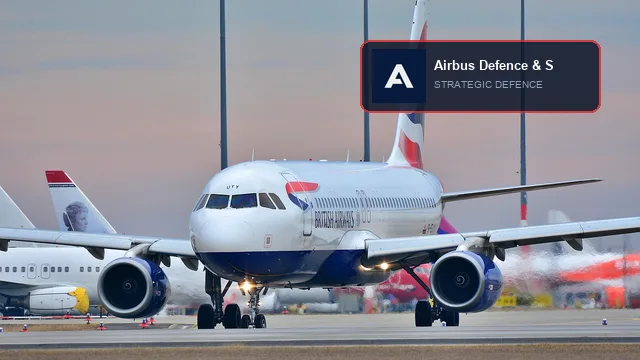
India's sixth-generation fighter ambitions have taken a new turn with Airbus eyeing the country as a potential partner for its future combat aircraft initiative. The development comes after a rift between Airbus and Dassault Aviation over the Future Combat Air System (FCAS) programme.
The FCAS programme has been plagued by disagreements between the two European aerospace giants over intellectual property rights, leadership responsibilities, and division of work. Despite repeated interventions by political leaders from France, Germany, and Spain, industry disagreements have continued to generate uncertainty regarding the programme's long-term structure.
In the midst of these challenges, India is exploring options to participate in a major international sixth-generation fighter programme alongside its indigenous Advanced Medium Combat Aircraft (AMCA) project. The country's interest in joining such a programme stems from its desire to gain access to next-generation technologies, including artificial intelligence-assisted combat systems, collaborative unmanned aircraft, advanced propulsion, low-observable materials, and highly networked combat architectures.
Airbus sees India as a strategic partner, capable of contributing engineering talent, manufacturing capacity, and future procurement volumes to its independent sixth-generation fighter concept. However, India's decision will also depend on its naval aviation requirements, with the Indian Navy seeking a carrier-capable sixth-generation fighter. This distinction could prove strategically important, as a carrier-capable sixth-generation fighter would align more closely with India's long-term naval aviation roadmap than a purely land-based aircraft.
Participation in an international sixth-generation programme would complement India's indigenous efforts, accelerating expertise in technologies that may eventually feed into future Indian combat aircraft. This would not only enhance the country's combat capabilities but also provide a strategic advantage in the region.
Airbus's proposal could offer India broader industrial participation than would likely be available under existing multinational programmes. Such cooperation could extend beyond aircraft development into areas including advanced avionics, artificial intelligence, digital engineering, sensor fusion, collaborative combat drones, and future propulsion technologies.
India's options for participation in an international sixth-generation programme are limited. The Global Combat Air Programme (GCAP) led by the United Kingdom, Japan, and Italy has already progressed significantly in terms of industrial organisation, technology development, and programme governance. According to sources, India is unlikely to be offered any meaningful development role within GCAP due to existing workshare arrangements among the three partner nations.
As global competition intensifies in sixth-generation combat aviation, India finds itself in a unique position. It possesses one of the world's largest future fighter aircraft requirements, a rapidly expanding aerospace industrial base, and ambitious indigenous programmes. These factors make India an increasingly attractive partner for major international aerospace companies seeking both technological collaboration and long-term market access.
Whether any formal proposal from Airbus materialises remains uncertain. Discussions remain at an exploratory stage, and no official negotiations have yet commenced. Nevertheless, the evolving situation highlights how rapidly changing dynamics within Europe's defence aerospace industry could create new opportunities for India.
In conclusion, India's sixth-generation fighter ambitions are set to take a new turn with Airbus eyeing the country as a potential partner for its future combat aircraft initiative. The development comes as the FCAS programme continues to face challenges, and India seeks to participate in a major international sixth-generation fighter programme. With its unique position in the global aerospace industry, India is poised to play a significant role in shaping the future of sixth-generation combat aviation.
Based on reporting from the original source. See our Copyright Policy for details.