ADA Cockpit Tender: Combined Pilot Inceptor Hardware to Link Tejas Mk2 and AMCA Programs
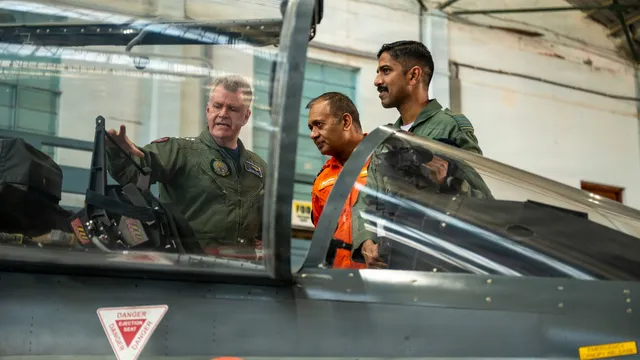
India's Aeronautical Development Agency (ADA) is taking a bold step in the country's fighter development effort by combining the expertise of the Tejas Mk1 with the cutting-edge technology of the Advanced Medium Combat Aircraft (AMCA). The agency has issued a combined service tender that bundles Pilot Inceptors and Flight Simulation Development Units for the LCA Mk1 alongside Weapon Integration Console frameworks for the AMCA. This pairing reflects a deliberate strategy of carrying hard-won cockpit and human-machine interface knowledge forward from an operationally proven platform into a fifth-generation stealth design.
The Tejas Mk1 programme brings a wealth of operational experience to the tender, with over 10,000 incident-free sorties logged since entering service. This accumulated knowledge is invaluable in refining control response curves and tactile feedback characteristics, which are critical in getting the human-machine interface right. The agency intends to mine this experience directly, refining control response curves and tactile feedback characteristics on a platform where pilots have already flown and fought, before those lessons are locked into the AMCA's still-developing control architecture.
This tender is part of a broader pattern of design convergence that ADA has been pursuing across its current fighter portfolio. The agency is building around a shared cockpit philosophy, anchored by a large panoramic wide-area display and a Hands-On Throttle And Stick configuration with a side-stick controller, rather than each platform developing its own bespoke human-machine interface from scratch. This commonality strategy reduces development time and cost, but its real value lies in pilot transition: an Indian Air Force pilot moving from a 4.5-generation Tejas cockpit into a fifth-generation stealth environment encounters control logic and interface conventions that are already familiar, cutting down the retraining burden that has historically slowed conversion onto new fighter types.
The AMCA side of this tender addresses a problem that is substantially harder on a stealth platform than on a conventional fighter. Internal weapons bays remove the pilot's ability to visually confirm weapon status, placing far greater weight on how release sequencing, targeting handoffs, and sensor-fusion data are presented and managed through the cockpit console. Developing that console framework alongside simulation hardware for an aircraft already in service is not incidental. It points toward shared hardware-in-the-loop and software testing infrastructure, where control logic and console behaviour can be validated against real pilot workload data gathered from Tejas operations before being adapted for the AMCA's considerably more complex sensor and weapons environment.
This consolidation matters beyond this one tender. It signals to domestic simulation and avionics companies that ADA is increasingly structuring procurements to reward integrated systems capability, a shift that, if sustained, could meaningfully deepen the pool of Indian vendors capable of supporting cockpit and mission-systems work not just for the AMCA but for the wider generation of indigenous fighters, including the LCA Mk2 and the Twin Engine Deck-Based Fighter (TEDBF), that will follow it into development over the coming decade.
In conclusion, India's fighter development is taking a significant leap forward by converging experience and innovation. The Aeronautical Development Agency's latest tender combines the expertise of the Tejas Mk1 with the cutting-edge technology of the Advanced Medium Combat Aircraft, reducing development time, cost, and pilot retraining burdens. This design convergence strategy has the potential to revolutionize the country's fighter development effort, making India a major player in the global aerospace industry.
Based on reporting from the original source. See our Copyright Policy for details.