A Life Saved, a Programme Transformed: India's Harrowing AWACS Crash and the Birth of a New Era in Airborne Defence
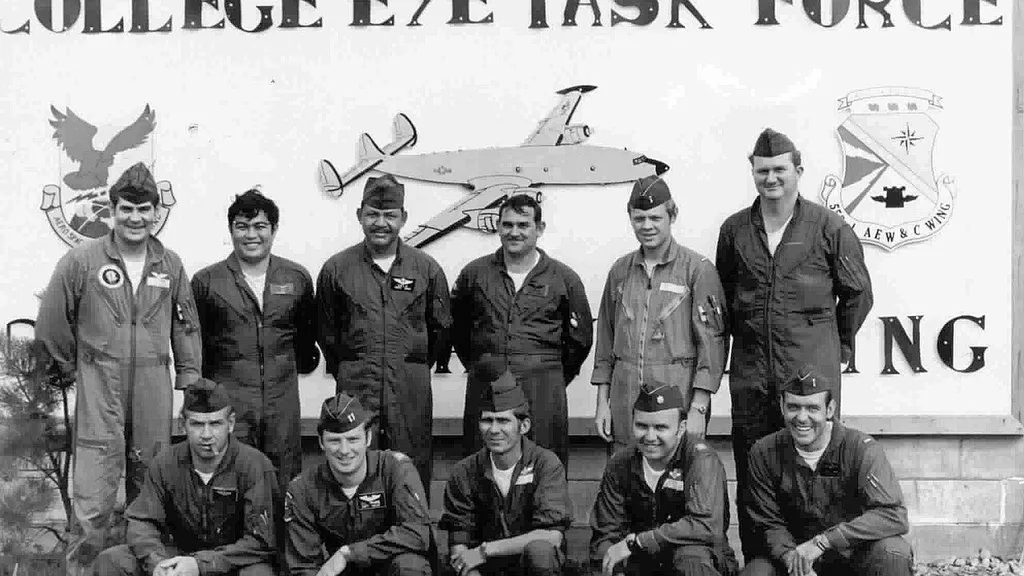
In the realm of advanced defence programmes, seconds can be the difference between life and death. For Dr. S. Christopher, former DRDO Chairman, this harsh reality became a stark reality on a fateful day in 1999. Working on the experimental Airborne Surveillance Platform, Christopher was part of a team that was pushing the boundaries of airborne system testing and safety.
As the project progressed, Christopher became increasingly involved in the development of the airborne radar system. His responsibilities expanded from antenna technology to the broader radar and signal-processing architecture of the programme. The team was working tirelessly to overcome the challenges of airborne-radar testing, which was proving to be a daunting task.
One of the primary issues was the high elevation of Bengaluru, which made it difficult for the Avro aircraft to achieve sufficient altitude to create the vertical separation required for meaningful airborne-radar testing. The team therefore decided to move the trials to the coast near Arakkonam, where the relatively uniform sea surface offered a more manageable environment for evaluating the radar.
The trials began in January 1999, and the initial flights went well. Two of Christopher's colleagues flew aboard the aircraft on the first day, while he himself flew on the aircraft the following day. However, the team had a critical target-tracking experiment planned, which required the arrival of an IAF An-32 from Kochi.
It was during the preparations for this crucial flight that Christopher's life changed in an instant. One of his colleagues suggested that he remain behind because the immediate problem appeared to involve signal processing rather than the antenna system. Christopher agreed to exchange places, and the aircraft took off without him.
At approximately 4:00-4:30 p.m., the team received news that the aircraft had crashed, killing all eight people aboard, including DRDO scientists and Indian Air Force personnel involved in the programme. Christopher's recollection of the incident provides a remarkable insight into the human dimension behind one of India's most consequential aerospace-development accidents.
The consequences of the tragedy were immediate and profound. The surviving members of the programme subsequently met with Dr. A.P.J. Abdul Kalam, who was serving as the head of DRDO and Secretary of Defence R&D at the time. Kalam took a firm position, stating that he did not want more DRDO scientists to be placed at unacceptable risk merely to continue the flight-test programme.
The incident forced the organisation to reconsider how airborne-system testing should be conducted and how scientific personnel should be protected during high-risk experimental activities. The Avro-based ASP programme was eventually discontinued, but the technological knowledge generated through the effort was not lost.
India later revived the airborne early-warning programme through the Centre for Airborne Systems (CABS), eventually developing the Netra AEW&C system around the Embraer EMB-145 platform. Today, this system stands as a testament to the lessons learned from the Arakkonam accident, which fundamentally altered India's approach to airborne system testing and safety.
The significance of Christopher's story extends beyond his personal survival. His account demonstrates how India's advanced defence programmes are often shaped by decisions made in seconds, and how catastrophic failures can fundamentally alter institutional approaches to testing and safety. As India continues to push the boundaries of airborne defence, the lessons learned from the Arakkonam accident remain a crucial reminder of the importance of prioritising safety and testing protocols.
In the end, Dr. S. Christopher's harrowing account serves as a poignant reminder that in the world of advanced defence, the margin between success and failure is often measured in seconds. The life-saving decision that spared his life that day not only changed his own fate but also had a profound impact on India's indigenous airborne early-warning programme, shaping the country's approach to airborne system testing and safety for generations to come.
Based on reporting from the original source. See our Copyright Policy for details.