A Leap of Faith: India's Private Space Sector Sets a New Standard
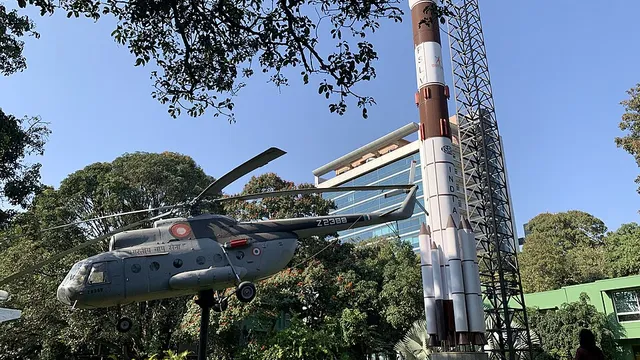
In the world of aerospace development, every milestone counts. And for Astrophel Aerospace, a promising private space startup, the much-anticipated vertical takeoff and vertical landing test flight has been a topic of great interest. Originally slated for a major national holiday, the launch has been postponed to later this year, leaving many wondering if this delay is a setback or a strategic move.
The development of a reusable launch vehicle is one of the most complex engineering feats attempted by modern science. It requires a seamless symphony of advanced propulsion, real-time guidance, navigation, and control systems, along with split-second decision-making algorithms executed by onboard flight computers. Astrophel Aerospace has chosen a remarkably ambitious path by developing these critical components entirely in-house, rather than relying on off-the-shelf foreign or outsourced hardware.
This vertical integration strategy grants the startup absolute control over its technology stack, ensuring lower production costs, greater design flexibility, and superior optimization. However, building an entire ecosystem of proprietary rocket hardware simultaneously means that integration is an intricate and time-consuming puzzle. Every single valve must withstand extreme cryogenic temperatures and high-pressure differentials, while actuators must respond in milliseconds to keep a hovering rocket stable against unpredictable atmospheric winds. Ensuring that these complex sub-systems communicate flawlessly requires exhaustive ground testing, rigorous simulations, and uncompromising quality assurance protocols.
Moreover, navigating the regulatory and airspace clearance landscape for rocket launches in India demands meticulous documentation and safety validations. As private space exploration gathers unprecedented momentum under a progressive national space policy, startups like Astrophel bear the responsibility of setting high safety benchmarks. Postponing the flight window allows the technical team to conduct comprehensive final integration checks and secure all necessary flight clearances without cutting corners.
Ultimately, space exploration has always belonged to the patient and the rigorous. A few extra months of rigorous validation and ground testing will ensure that when Astrophel Aerospace's vehicle finally lifts off the pad, it will do so with maximum reliability. This calculated delay safeguards not only expensive hardware but also the burgeoning reputation of India's private space sector as a hub of methodical, world-class engineering. As the team continues fine-tuning its hardware, the aerospace community waits with bated breath, knowing that a thoroughly validated vehicle stands a far better chance of turning the dream of reusable rocket technology into a sustainable reality.
In an industry where cutting corners can have catastrophic consequences, Astrophel Aerospace's commitment to thoroughness and precision is a testament to their dedication to setting high safety benchmarks in the private space sector. By taking the time to get it right, the team is not only ensuring the success of their mission but also paving the way for a new era of space exploration in India.
A Leap of Faith
In a country where space exploration has long been the domain of government agencies, private startups like Astrophel Aerospace are breaking new ground. By developing their own proprietary rocket hardware, they are not only reducing costs but also increasing their design flexibility and optimization.
The Art of Integration
Building an entire ecosystem of proprietary rocket hardware simultaneously is a daunting task. Every single valve must withstand extreme cryogenic temperatures and high-pressure differentials, while actuators must respond in milliseconds to keep a hovering rocket stable against unpredictable atmospheric winds. Ensuring that these complex sub-systems communicate flawlessly requires exhaustive ground testing, rigorous simulations, and uncompromising quality assurance protocols.
Navigating the Regulatory Landscape
Navigating the regulatory and airspace clearance landscape for rocket launches in India demands meticulous documentation and safety validations. As private space exploration gathers unprecedented momentum under a progressive national space policy, startups like Astrophel bear the responsibility of setting high safety benchmarks.
The Road to Success
A few extra months of rigorous validation and ground testing will ensure that when Astrophel Aerospace's vehicle finally lifts off the pad, it will do so with maximum reliability. This calculated delay safeguards not only expensive hardware but also the burgeoning reputation of India's private space sector as a hub of methodical, world-class engineering.
Key Takeaways
- Astrophel Aerospace's commitment to thoroughness and precision is a testament to their dedication to setting high safety benchmarks in the private space sector.
- The development of proprietary rocket hardware is a key aspect of the startup's vertical integration strategy, ensuring lower production costs, greater design flexibility, and superior optimization.
- Navigating the regulatory and airspace clearance landscape for rocket launches in India demands meticulous documentation and safety validations.
- A few extra months of rigorous validation and ground testing will ensure that when Astrophel Aerospace's vehicle finally lifts off the pad, it will do so with maximum reliability.
Based on reporting from the original source. See our Copyright Policy for details.