Revolutionary Leapfrog: India's Bold Bid to Dominate Fighter Jet Propulsion
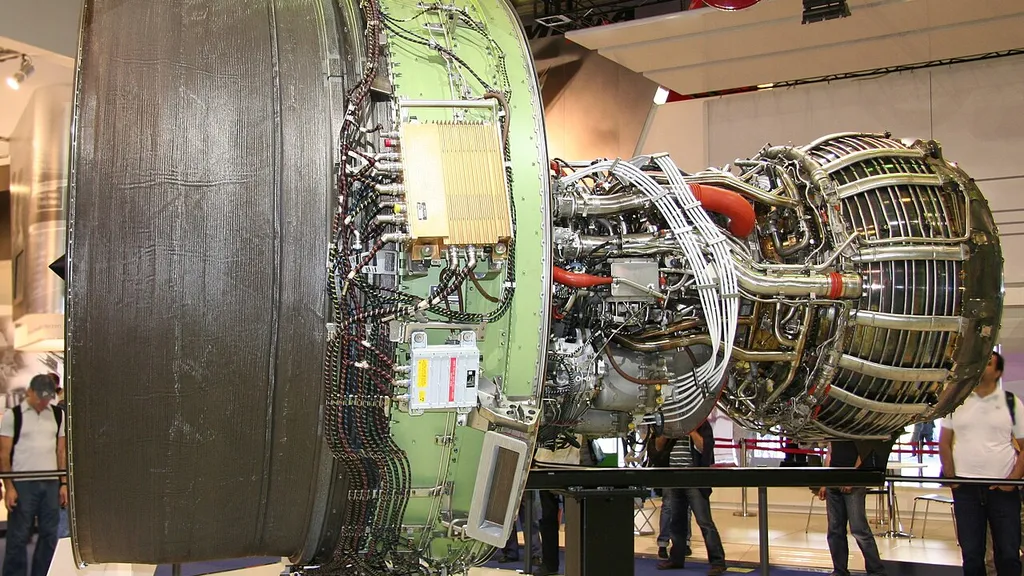
India's aerospace industry has long been reliant on foreign suppliers for its fighter jet propulsion needs, but a bold new proposal from D-Propulse could change that. The Delhi-based startup, led by founder and CEO Saurav Jha, is working on a revolutionary new engine that combines the efficiency of a conventional turbofan with the raw energy of a Rotating Detonation Engine (RDE).
This innovative design, known as a hybrid engine, promises to boost thermal efficiency by 15 to 25 percent compared to traditional constant-pressure combustors. That means longer combat radius, more endurance, and greater operational range without the need for larger fuel tanks. It's a game-changer for India's fighter engine ambitions, and one that could propel the country to the forefront of military aviation.
D-Propulse's proposal is grounded in real, demonstrated hardware rather than pure speculation. The company has already developed a 5 kN air-breathing RDE combustor, which has been validated for potential cruise missile applications. The startup, incubated at IIT Madras and co-founded alongside former DRDO scientist Dr V. Ramanujachari, has run its air-breathing prototype at a DRDO facility in Hyderabad, achieving a sustained 5 kN burn integrated with an aerospike nozzle design.
The core concept of the hybrid engine relies on combining two fundamentally different combustion approaches within a single powerplant. A conventional turbofan relies on deflagration, subsonic, constant-pressure burning, while an RDE uses an annular channel where fuel-air mixtures ignite via detonation, supersonic shockwaves that travel continuously around a circular chamber.
In Jha's proposed hybrid architecture, the two combustion modes would handle different portions of the flight envelope. During low-speed operations, takeoff, subsonic cruise, and dogfighting manoeuvres, the engine's front-end fans, compressors, and turbines would function much like a standard turbofan, delivering the high bypass-ratio thrust and fuel efficiency that regime demands. For high-performance, high-Mach operations, compressed air drawn from the engine's compressor stages would instead feed into a dedicated RDE combustor, unlocking a fundamentally different, more energy-dense combustion process for the flight regimes where it matters most.
The reason this hybrid approach is generating serious interest comes down to a property called Pressure-Gain Combustion, or PGC. Unlike conventional combustors, which lose some total pressure through the burning process, detonation-based combustion actually increases total pressure as it burns. That difference lets an engine extract significantly more usable energy from every unit of fuel it consumes.
However, the success of D-Propulse's hybrid engine proposal will depend on the ability of India's aerospace and materials science establishment to overcome the substantial engineering hurdles standing between lab-scale success and a deployable fighter engine. The stakes are high, but the payoff could be a game-changer for India's fighter engine ambitions.
If D-Propulse or a similar effort can eventually crack the problems of thermodynamic flow mismatch, thermal-stress, and combustion-stability, the strategic payoff for India would be considerable. A genuinely indigenous, next-generation hybrid propulsion pathway, if it matures on anything close to Jha's proposed timeline, would give India a potential technological leapfrog opportunity rather than simply catching up to conventional turbofan designs that established powers like the US, UK, France, and Russia have spent decades refining.
The road ahead will be challenging, but the potential rewards are worth it. As D-Propulse continues scaling its RDE technology beyond missile-class applications toward something genuinely fighter-relevant, the world will be watching closely. Will India's aerospace industry be able to leapfrog the West with a revolutionary new fighter engine? Only time will tell, but one thing is certain - the stakes are high, and the potential payoff is enormous.