India's Tejas Mk1 Jets to Get Long-Awaited Upgrade, Closing Sensor Gap with Mk1A Siblings
India's Tejas Mk1 Jets to Get Long-Awaited Upgrade, Closing Sensor Gap with Mk1A Siblings
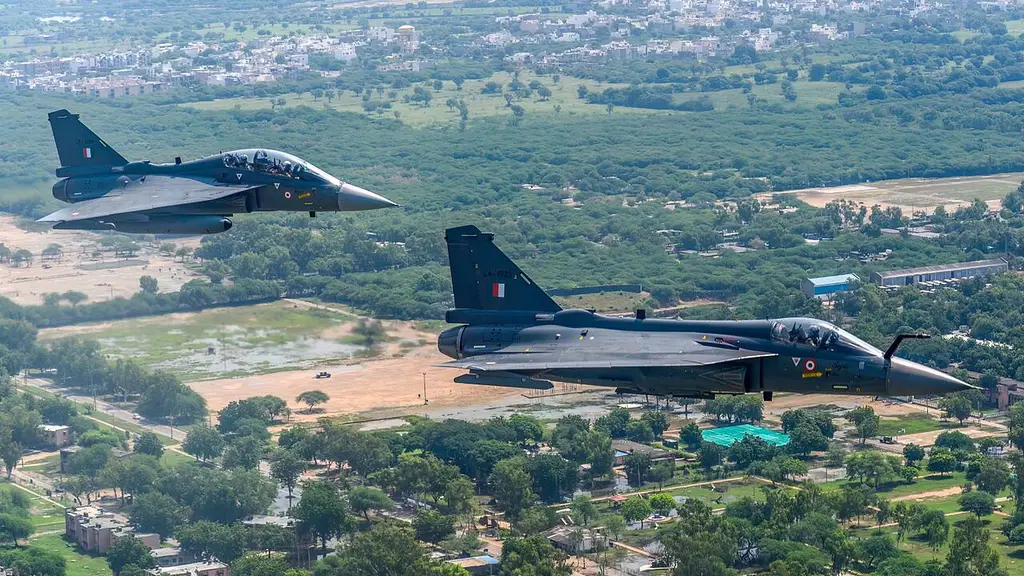
The Indian Air Force (IAF) is set to receive a major boost in its Tejas Mk1 fighter fleet, with plans to upgrade the original jets to the latest sensor standards by 2030. The upgrade, which involves the installation of the indigenous Uttam Active Electronically Scanned Array (AESA) radar, is expected to bring the earliest Tejas airframes closer to parity with their Mk1A siblings in terms of sensor performance.
The Tejas Mk1 FOC standard represents the fully combat-cleared configuration of the original Light Combat Aircraft, which was first inducted into service in 2015. While the Mk1A variant has already been upgraded with a modern AESA radar, the older Mk1 fleet has continued to fly with its legacy Multi-Mode Radar (MMR), a hybrid system built around Israeli ELM-2032 technology. The MMR, although adequate when originally designed, has become a limiting factor for the aircraft's long-term relevance, with its limitations in electronic warfare resistance and simultaneous target tracking comparing unfavorably to the sensor suites expected on modern regional threats.
The Uttam AESA radar, developed by DRDO's Electronics and Radar Development Establishment, is built on a solid-state, gallium arsenide architecture and features over 900 transmit-receive modules. This cutting-edge technology is expected to significantly enhance detection range, tracking precision, and multi-target engagement capability, making it an ideal solution for the IAF's Tejas Mk1 fleet.
One of the key benefits of the Uttam radar is its ability to track multiple targets simultaneously, with a reported capability to track over 50 targets at ranges exceeding 150-200 km. This is a significant improvement over the current MMR system, which is limited to tracking a single target at a time. The Uttam radar also supports simultaneous air-to-air, air-to-ground, and air-to-sea operating modes, making it a versatile and capable system.
The installation of the Uttam AESA radar is expected to reduce long-term dependency on foreign OEMs for upgrades and maintenance cycles, a strategic consideration that carries extra weight for older airframes that may struggle to source continued support for legacy Israeli-origin radar components as the type ages further.
The upgrade is part of a broader effort by the IAF to standardize sensor capability across its indigenous Tejas fleet. The Mk1A variant, which has already been upgraded with a modern AESA radar, is now entering serial production, and the IAF is keen to ensure that the earlier Mk1 airframes are brought up to the same level of sensor performance.
The path to installing the Uttam radar on the Tejas Mk1 fleet has not been entirely smooth. The radar was originally slated to begin replacing the Israeli-sourced ELM-2052 AESA radar on Mk1A jets starting from the 41st aircraft in the production line, but that plan hit turbulence due to ongoing delays in the radar's certification and pressure from the IAF to avoid further programme setbacks.
However, recent reports suggest that momentum has since picked up, with India reportedly moving closer to clearing an Uttam AESA radar contract for the Tejas Mk1A fleet. HAL's chairman has also confirmed that a fresh order of 97 Tejas Mk1A jets is planned to be equipped with the Uttam radar alongside the long-range Meteor beyond-visual-range air-to-air missile.
If it materialises, an Uttam retrofit for the Mk1 FOC fleet would mark an important step toward standardising sensor capability across India's entire indigenous Tejas fleet, rather than leaving the earliest-inducted jets several technological generations behind their Mk1A and eventual Mk2 counterparts. It would also extend the operational relevance of the original Tejas airframes well into the 2030s, ensuring the IAF doesn't end up operating early Tejas jets with meaningfully weaker radar performance than the rest of its indigenous fighter inventory.
The upgrade is a significant step forward for the IAF's Tejas fleet, and it is expected to have a major impact on the service's operational capabilities. With the Uttam AESA radar, the Tejas Mk1 fleet will be able to track multiple targets simultaneously, with improved detection range and tracking precision. This will enable the IAF to engage multiple targets at once, making it a more effective and capable fighter force.
In conclusion, the upgrade of the Tejas Mk1 fleet with the Uttam AESA radar is a significant development for the IAF, and it is expected to have a major impact on the service's operational capabilities. The upgrade will bring the earliest Tejas airframes closer to parity with their Mk1A siblings in terms of sensor performance, reducing long-term dependency on foreign OEMs for upgrades and maintenance cycles. The Uttam radar is a cutting-edge technology that will significantly enhance detection range, tracking precision, and multi-target engagement capability, making it an ideal solution for the IAF's Tejas Mk1 fleet.