Rebuilding a Region: Jammu and Kashmir's Journey to Stability and Growth
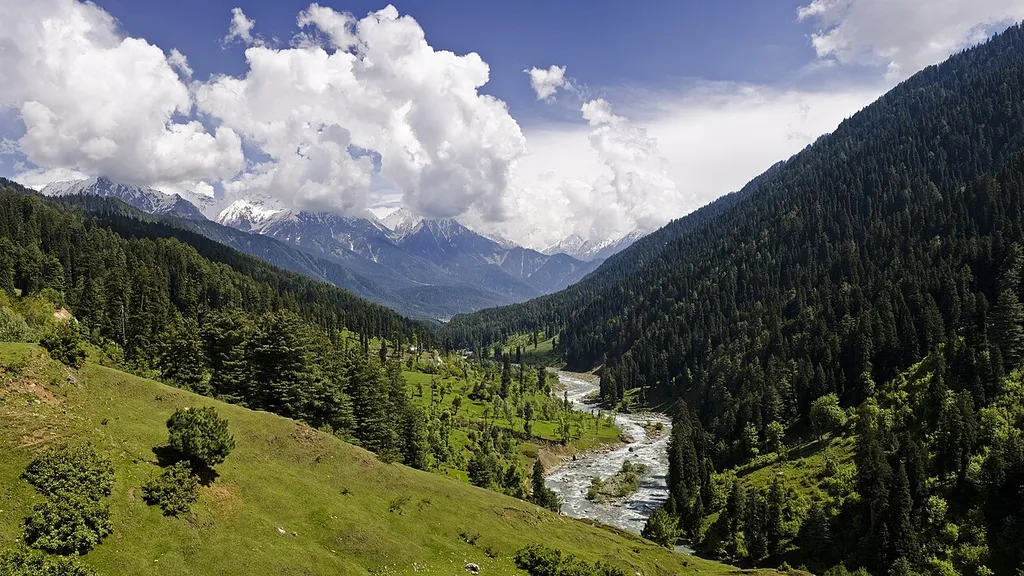
Rebuilding a Region: Jammu and Kashmir's Journey to Stability and Growth
In the summer of 2019, a historic decision was made that would change the fate of Jammu and Kashmir forever. The abrogation of Article 370, a provision in the Constitution that granted special status to the region, marked a significant shift in the region's governance and security dynamics.
Prior to this decision, Jammu and Kashmir was governed by a separate set of provisions in the Constitution and the Ranbir Penal Code. This unique setup allowed separatist groups to wield significant influence, often using their power to shelter terrorists and instigate violence. The region was plagued by separatism and terror, with a constant threat of violence and instability.
However, with the Union government taking control of law and order, the dynamics began to change. Agencies such as the National Investigation Agency (NIA) and Enforcement Directorate (ED) were given a free hand to investigate, and several probes were conducted to expose the money trail of those fueling violence. Investigations revealed that large sums of money from Pakistan were being used to fund luxuries and instigate violence, often through multiple channels.
As public opinion began to change, separatism started to die a natural death in the Valley. The death of separatism had a direct bearing on terror activities, as they lost their voice and influence in the region. Groups such as the Hizbul Mujahideen, which were once prominent in the region, have lost relevance in the Valley.
While there have been terror attacks post 2019, the volumes are lower. The biggest attack that Jammu and Kashmir witnessed post the abrogation of Article 370 was the Pahalgam attack. However, with no interference from the local government and separatist elements, it was easier for the Central agencies to fight terror and investigate cases without any fear or pressure.
The local police too faced no political pressure and worked seamlessly with the Central agencies, which went a long way in breaking both terror modules and the massive overground worker (OWG) network. The permanent framework under Article 35A was abolished, and women no longer lose their residency or property-related rights if they marry non-residents.
The decision did a lot of good for women's empowerment, as the Central laws that protect women, including those relating to domestic violence and child abuse, became fully applicable to Jammu and Kashmir. Women's mobility and participation in public life have improved, and there has been increased political participation through reservation in local bodies and bigger representation in the District Development Council elections.
Thanks to better security in Jammu and Kashmir, the National Education Policy (NEP) has been implemented across schools and universities, and schools function normally without being closed due to terror attacks and violence. The region has seen a boost in tourism, investments, and women's empowerment.
However, challenges remain, with Pakistan-backed groups still posing a threat. Containing terrorism will be key to the long-term success of post-Article 370 reforms. The Lashkar-e-Taiba and its proxy, The Resistance Front (TRF), continue to pose a challenge for the security agencies, and attempts are constantly made by Pakistan to revive terrorism in Jammu and Kashmir.
There are scores of terrorists waiting at the launch pads in Pakistan-occupied Kashmir (PoK) to enter India, and this remains a constant challenge for the security agencies. The killing of a head constable in Anantnag and a terror attack which claimed the lives of two migrants were both claimed by TRF. This remains a major challenge, and the process to contain such groups would need to be a constant process.
In conclusion, Jammu and Kashmir's journey to stability and growth has been a long and challenging one. However, with the Union government taking control of law and order and the efforts of security agencies, the region has seen significant progress. Containing terrorism will be key to the long-term success of post-Article 370 reforms, and it is essential that the security agencies continue to work towards maintaining peace and stability in the region.