Pakistan's Military Tightens Grip on Occupied Kashmir, Forcing Protests to Go Underground
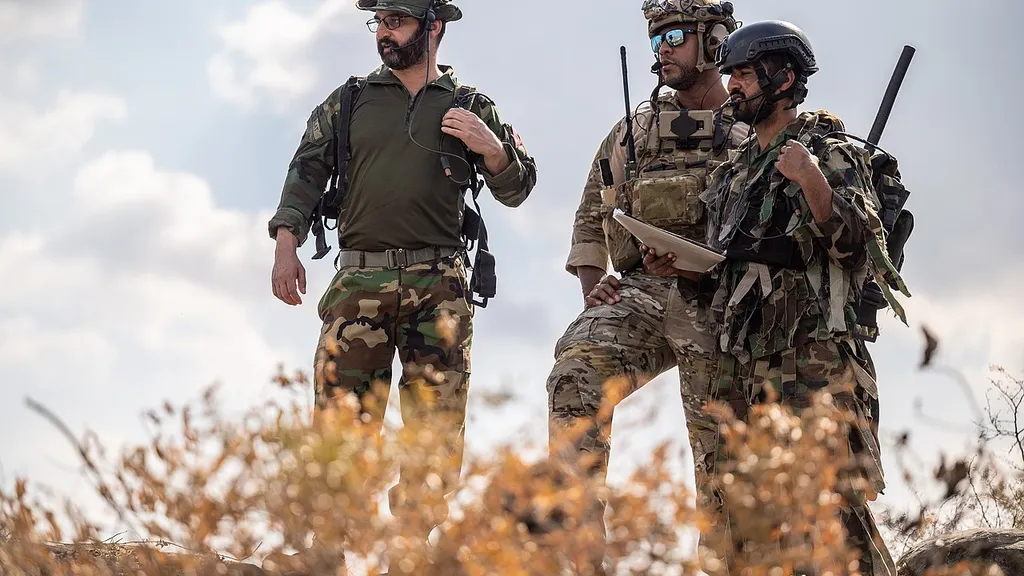
Pakistan's military has tightened its grip on occupied Kashmir, forcing protests to go underground as the government cracks down on dissent.
The protests in Pakistan-occupied Jammu and Kashmir (PoJK) have been gaining momentum over the past few months, with demonstrators demanding governance and electoral reforms. However, the Pakistani government has responded with brute force, killing dozens of protesters and injuring many more.
At the centre of the controversy is Pakistan's Defence Minister Khawaja Asif, who has equated the protesters with India, calling them 'enemies'. This move has been seen as a clear indication that the government is preparing to unleash its iron fist on the protesters.
The Joint Awami Action Committee (JAAC), a coalition of traders, students, and civil society organisations, has been leading the protests. The JAAC has been demanding the abolition of refugee seats in the PoJK assembly, which are reserved for people who migrated from India's Kashmir after 1947. The majority of these refugees do not reside in PoJK, but they have been exploiting the refugee seats to form the government in the occupied territory.
The PoJK legislative assembly has 53 seats, with 12 reserved for refugees, eight for women, ulema (Islamic scholars), and technocrats. This leaves only 33 seats for direct polling, making it difficult for the people of PoJK to have a say in the government.
The Pakistani government has imposed a shutdown on communications in the region, making it difficult to confirm casualty figures. However, it is estimated that at least 21 protesters were killed and dozens injured when Pakistani security forces opened fire on protesters in PoJK on July 27.
The protests have spread across PoJK, with Rawalakot, Muzaffarabad, and Mirpur witnessing unrest. The Pakistani government has been using force to quell the protests, with security personnel firing at protesters and using tear gas and batons to disperse them.
Despite the government's efforts to silence the protesters, the movement is gaining momentum. The protests have transformed into a full-blown political movement, with the people of PoJK demanding an end to the Pakistani government's oppressive policies.
The stakes are high in this volatile region, where the protesters are demanding governance and electoral reforms. Will Pakistan's establishment unleash its iron fist, or will the people of PoJK rise up against oppression?
The Backstory of PoJK's Protests
The protests in PoJK have been ongoing for several months, with the Joint Awami Action Committee leading the charge. The JAAC has been demanding governance and electoral reforms, including the abolition of refugee seats in the PoJK assembly.
The Pakistani Government's Response
The Pakistani government has responded to the protests with brute force, killing dozens of protesters and injuring many more. The government has imposed a shutdown on communications in the region, making it difficult to confirm casualty figures.
The Impact on PoJK's Residents
The protests have had a significant impact on the residents of PoJK, who are demanding an end to the Pakistani government's oppressive policies. The protesters are calling for governance and electoral reforms, including the abolition of refugee seats in the PoJK assembly.
Key Takeaways
- The protests in Pakistan-occupied Jammu and Kashmir (PoJK) have been gaining momentum over the past few months, with demonstrators demanding governance and electoral reforms.
- The Pakistani government has responded to the protests with brute force, killing dozens of protesters and injuring many more.
- The Joint Awami Action Committee (JAAC) has been leading the protests, demanding the abolition of refugee seats in the PoJK assembly.
- The PoJK legislative assembly has 53 seats, with 12 reserved for refugees, eight for women, ulema (Islamic scholars), and technocrats, leaving only 33 seats for direct polling.
- The Pakistani government has imposed a shutdown on communications in the region, making it difficult to confirm casualty figures.
- The stakes are high in this volatile region, where the protesters are demanding governance and electoral reforms.