India's Private Sector Takes Aim at Closing the Drone-Missile Cost Gap
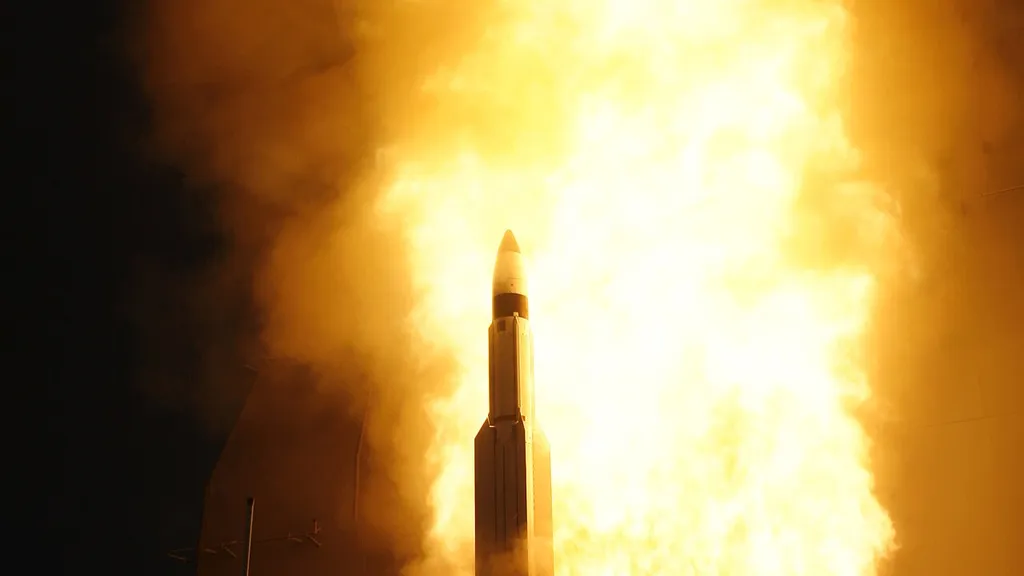
The Indian Air Force is at the forefront of a growing trend in military aviation: the development of low-cost, guided air-to-air missiles to counter the threat of cheap, mass-produced loitering munitions. At the heart of this requirement is a simple but urgent problem: cost asymmetry. The proliferation of Shahed-style kamikaze drones and similar loitering munitions has created a dynamic where high-end air-to-air missiles, often costing hundreds of thousands of dollars, are being used to neutralise relatively inexpensive drones.
This imbalance has played out repeatedly in recent conflicts, where helicopters operating in a low and slow flight regime have been well-suited to intercept and destroy loitering munitions. However, the tactic only makes long-term sense if the cost of the interceptor doesn't dwarf the cost of the target. The IAF is now looking to private industry to fill this gap, with a requirement for a compact, flight-approved counter-UAS system that integrates seamlessly into existing rotary-wing aircraft.
The key to this requirement is a close-range engagement envelope of roughly 5 to 10 kilometres, a 'knife-fight' distance well-suited to the LCH Prachand's existing sensor suite and the typical detection range for small UAV threats. This range band sits between the helicopter's gun and rocket armament and longer-range guided munitions, filling a tactical gap where cannon fire is too imprecise and existing rockets or premium missiles are either unavailable or uneconomical.
Rather than relying solely on HAL or DRDO, the IAF and Indian Army are increasingly turning to private-sector defence companies to develop this next-generation weapon. The armed forces' goal is a low-cost, guided air-to-air missile that can be integrated into existing rotary-wing aircraft, giving pilots instantaneous threat detection, early warning, and the immediate ability to neutralise incoming hostiles. This is part of a broader pattern of the military looking beyond traditional public-sector giants for rapid, cost-effective solutions to emerging threats.
For India's private defence manufacturers, this represents a significant opportunity. A low-cost guided air-to-air missile developed domestically would not only meet an urgent operational requirement but could also become an attractive export product for other nations grappling with the same drone-versus-missile cost math. This is particularly relevant as loitering munitions proliferate across conflict zones worldwide, and countries are looking for affordable solutions to counter the threat.
The development of this low-cost guided air-to-air missile is one piece of a larger effort to transform the LCH Prachand from a battlefield 'tank buster' into a genuine counter-UAS platform. The Indian Army is separately collaborating with private companies to develop air-launched drones for ISR and interception missions, designed to be launched from the Prachand's stub wings with a range of 50 to 100 kilometres and the ability to loiter, track, and intercept larger UAVs.
An indigenous, low-cost option would align neatly with India's Atmanirbhar Bharat push for self-reliance in defence manufacturing, reducing dependence on foreign suppliers while giving the armed forces more flexibility to scale production and iterate on the design as drone threats evolve. If successful, this program would give the IAF and Army an affordable, scalable answer to one of modern warfare's more vexing problems: how to stop a swarm of cheap, disposable threats without bankrupting your own air defence budget in the process.
With the Prachand fleet set to expand significantly following recent large-scale procurement approvals, and with drone warfare showing no signs of slowing down, a dedicated low-cost interceptor missile could become as central to the helicopter's future role as the cannon and rockets it already carries. This is a critical moment for India's private defence manufacturers, who have the opportunity to develop a game-changing technology that could not only meet an urgent operational requirement but also become a major export product for the country.