India's Indigenous Turbofan Engine Programme Gains Crucial Momentum with Core Speed Breakthrough
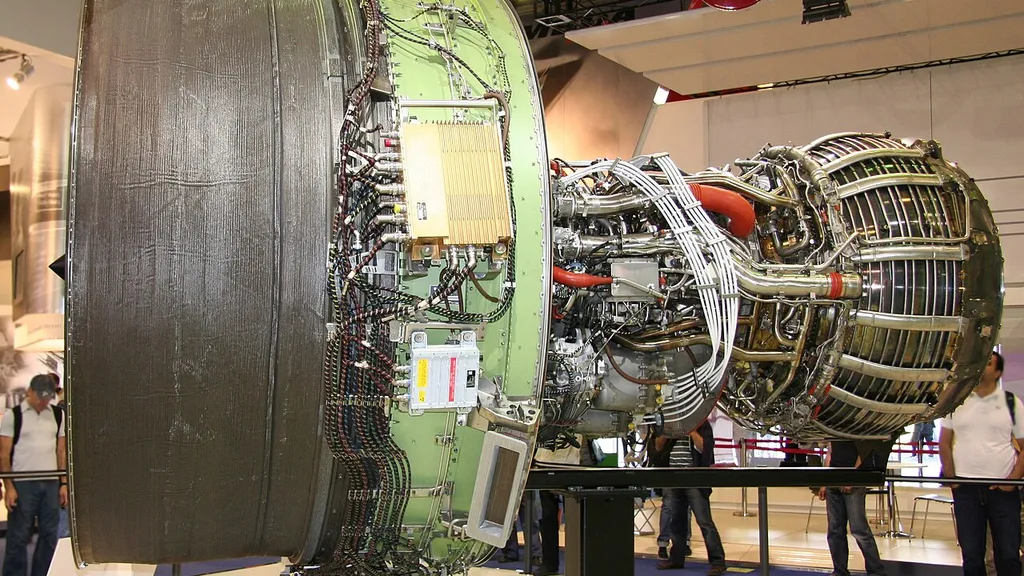
The long and winding road to India's indigenous turbofan engine programme has finally hit its stride. After years of criticism and delays, Hindustan Aeronautics Limited's (HAL) HTFE-25 programme has cleared a major milestone, with the core engine reaching 99.5% of its maximum core speed. This breakthrough marks a turning point for the programme, which has faced numerous challenges and setbacks since its inception in 2013.
The HTFE-25 is a 25 kilonewton thrust class turbofan, designed for a specific and commercially significant niche. Its thrust class positions it for a single-engine configuration for aircraft up to roughly five tonnes or a twin-engine configuration scaling up to nine tonnes. This versatility makes the HTFE-25 an attractive option for basic and advanced military trainer aircraft, small business jets, and large unmanned aerial vehicles.
HAL's decision to fund the HTFE-25 programme entirely from its own internal resources has afforded the company freedom to pursue long-term indigenous capability building without external programme pressure. However, this arrangement has also contributed to the schedule slippage that has dogged the effort since its early years.
The programme's core engine first ran successfully in December 2015, witnessed by then-Defence Minister Manohar Parrikar. By 2019, HAL had built two core engines that had together logged 339 test runs, achieving one hundred percent maximum core speed with and without inlet guide vane modulation, along with cold-starting trials at low temperatures and an initial basic afterburner configuration test.
However, progress from there slowed considerably. By mid-2024, acceleration trials on the full technology demonstrator engine had reached only 55 percent of design speed, a pace that drew pointed criticism over inadequate testing infrastructure and unclear development objectives. HAL's response was largely structural, with the company inaugurating a new ten-thousand-square-metre design and test facility at its Aero Engine Research and Development Centre in December 2023.
This new facility is equipped with advanced computational tools, internal fabrication capability, and dedicated dual test beds specifically for the HTFE-25, alongside its sister turboshaft programme, the HTSE-1200. HAL officials pointed to this infrastructure investment as the basis for renewed confidence that the programme would regain momentum, acknowledging that the typical five-year-plus transition from Stage II testing to certified production readiness remained a genuine constraint regardless of testing capacity.
Reaching 99.5 percent of core engine speed is a meaningfully different achievement from the 55 percent full-engine acceleration figure reported roughly two years earlier. The core engine is the thermodynamic heart of any turbofan, and its performance under sustained high-speed operation is a critical indicator of the engine's fundamental design. Validating light-up reliability, acceleration behaviour, and near-maximum rotational speed on the core confirms that the engine's most demanding thermal and mechanical environment can sustain near-design-limit operation without structural or thermal failure.
This breakthrough has significant implications for India's aerospace industry, including the development of indigenous business jets and unmanned aerial vehicles. The HTFE-25's success could also open up new opportunities for India's defence sector, including the production of advanced military trainer aircraft and unmanned systems. With a new design and test facility in place, HAL is confident that the programme will regain momentum and meet its target of production readiness by 2030.
Key Takeaways
- The HTFE-25's core engine has reached 99.5% of its maximum core speed, a vital validation of the engine's fundamental design.
- The programme has cleared a major milestone, marking a turning point for the HTFE-25 programme, which has faced criticism and delays for over a decade.
- HAL's new design and test facility at its Aero Engine Research and Development Centre in Bengaluru is equipped with advanced computational tools, internal fabrication capability, and dedicated dual test beds specifically for the HTFE-25.
- The programme's success could open up new opportunities for India's aerospace industry, including the development of indigenous business jets and unmanned aerial vehicles.
- With a new design and test facility in place, HAL is confident that the programme will regain momentum and meet its target of production readiness by 2030.