India's Defence Industry Takes a Giant Leap Forward with Astra Mk2
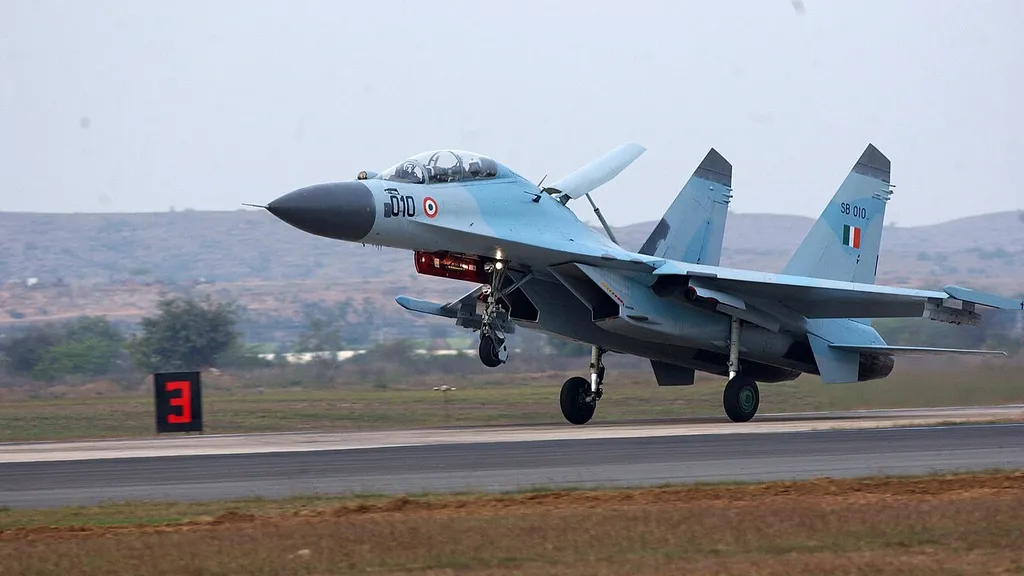
India's Defence Industry Takes a Giant Leap Forward with Astra Mk2
India's decision to open the production of the Astra Mk2 beyond-visual-range air-to-air missile to private defence companies marks a significant milestone in the country's strategic defence manufacturing landscape. This move signals a structural shift in the way India builds future missile inventories, with private companies now at the helm.
For decades, missiles represented the final major segment of India's defence industry that remained almost exclusively within the domain of government-owned enterprises. However, the growing maturity of India's private defence manufacturing ecosystem has led to a significant change in the way defence equipment is produced.
Companies such as Tata Advanced Systems, Bharat Forge, and Mahindra Defence have demonstrated their ability to manufacture complex aerospace structures, launch systems, radars, armoured vehicles, and precision-engineered components to military standards. Many of these firms already contribute extensively to Defence Research and Development Organisation (DRDO) programmes as subsystem suppliers, but final integration and missile production largely remained the responsibility of Bharat Dynamics Limited.
The Astra Mk2 programme represents a significant leap over the original Astra missile, incorporating a dual-pulse solid rocket motor, an indigenous active radar seeker, and enhanced electronic counter-countermeasure capabilities. This gives the Astra Mk2 a substantially longer engagement range and improved end-game performance against highly manoeuvrable aerial targets.
By bringing major private companies into missile manufacturing, India can significantly expand production capacity while reducing delivery timelines. Multiple production lines also improve resilience by reducing dependence on a single manufacturer and enabling surge production during periods of heightened operational demand.
The implications of this move extend beyond manufacturing volume. Competition between public and private industry has the potential to improve production efficiency, encourage innovation in manufacturing processes, and reduce lifecycle costs. Private companies often possess advanced expertise in automation, digital manufacturing, robotics, and precision engineering that can complement DRDO's missile development capabilities.
Another important aspect is supply chain development. Modern guided missiles comprise thousands of precision components, including propulsion systems, composite structures, actuators, seekers, onboard computers, navigation systems, and electronic subsystems. Expanding missile production into the private sector is likely to stimulate investments across hundreds of small and medium-sized enterprises supplying these specialised technologies, strengthening India's broader defence industrial base.
The Astra Mk2 programme may also serve as a template for future missile production. If the private sector demonstrates the ability to manufacture advanced air-to-air missiles at scale while maintaining strict quality standards, similar production models could eventually be adopted for other indigenous missile programmes, including surface-to-air, anti-ship, anti-radiation, and tactical strike weapons.
This move is also strategically important from the perspective of defence exports. India has set ambitious targets to expand defence exports significantly over the coming decade. Achieving those objectives requires industrial capacity capable of simultaneously meeting domestic military requirements and fulfilling international orders. A broader manufacturing base involving multiple private companies provides greater flexibility to support both goals.
The participation of major industrial groups such as Tata, Bharat Forge, and Mahindra also reflects the increasing confidence of India's private sector in high-technology defence manufacturing. These companies have invested heavily in aerospace production facilities, advanced machining, composite manufacturing, and systems integration, positioning themselves to undertake projects that were once considered the exclusive preserve of government-owned enterprises.
In conclusion, India's decision to open the production of the Astra Mk2 beyond-visual-range air-to-air missile to private defence companies marks a significant milestone in the country's strategic defence manufacturing landscape. This move signals a structural shift in the way India builds future missile inventories, with private companies now at the helm. With private companies now at the helm, India can expand production capacity, reduce delivery timelines, and stimulate investments across hundreds of small and medium-sized enterprises supplying precision components.